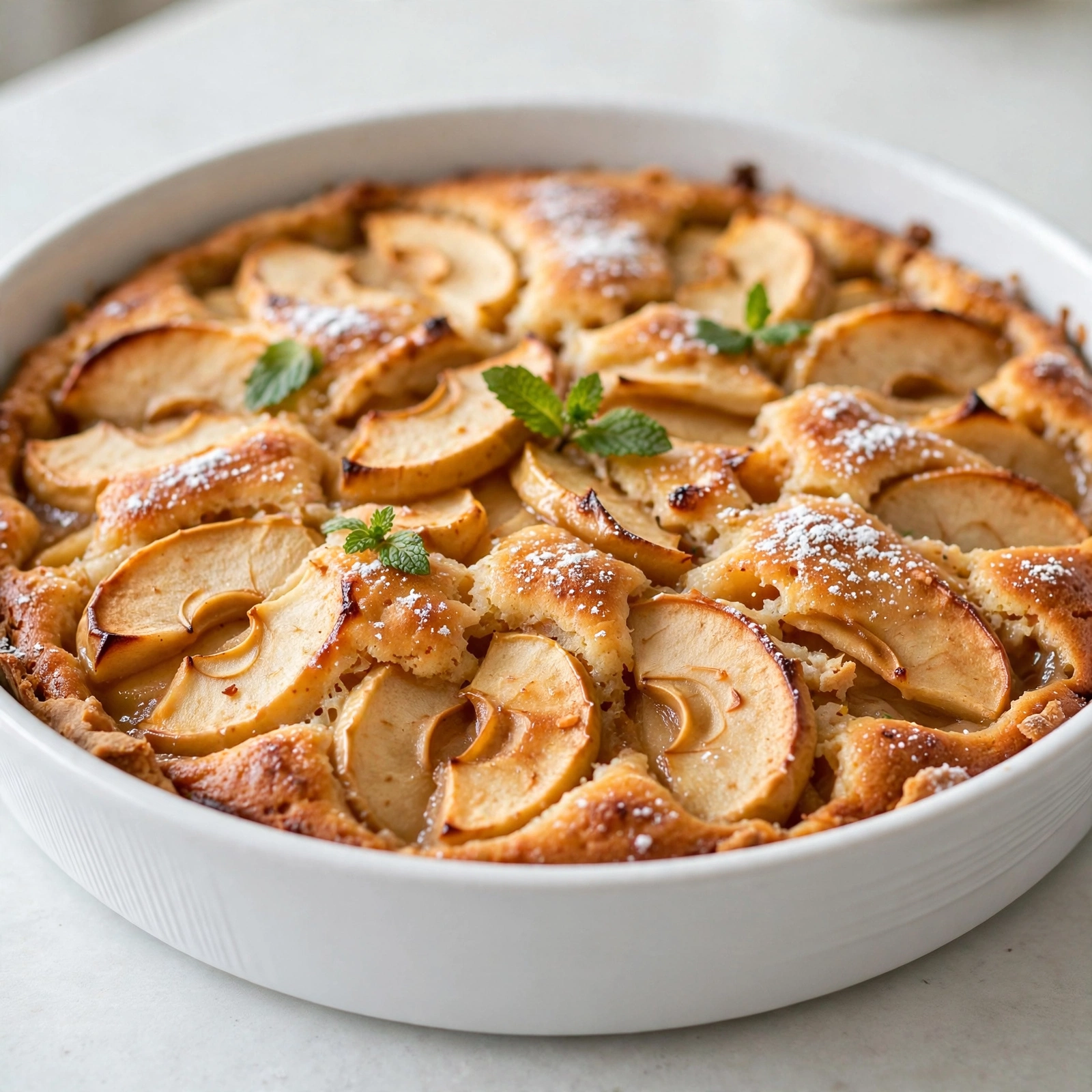
German Apple Pie (Apfelkuchen)
This German Apple Pie layers a buttery shortbread crust with cinnamon-spiced apples and a silky custard topping for a dessert that's rustic, elegant, and utterly irresistible.

A Slice of Germany on Your Table
If you have never had German Apple Pie, also known as Apfelkuchen, you are in for something special. Forget the double crust and lattice work of a classic American pie. This version is built on a tender, cookie like shortbread base, piled high with cinnamon spiced apples, and finished with a silky baked custard that turns golden in the oven. It is the kind of dessert pies deserve to be more often: simple, honest, and deeply comforting.
What makes this recipe so beloved across German bakeries and home kitchens is the balance. The crust is buttery but sturdy, the apples stay slightly tart and tender rather than mushy, and the custard ties everything together with a gentle sweetness. It is an amazing apple pie for anyone who wants something a little different from the usual, and it happens to look absolutely gorgeous sliced on a cake stand.
Before we get cooking, the right tools and ingredients make a real difference here. A good springform pan ensures clean release without disturbing that delicate custard layer, and a reliable vegetable peeler makes quick work of six apples. If you bake often, investing in a sturdy pastry cutter also saves your hands a lot of effort when cutting butter into the flour.
Choosing and Prepping Your Apples
The apples are really the heart of this recipe, so choose a variety that holds its shape and offers a bit of tartness to balance the sweet custard. Granny Smith is the classic choice, but Boskoop, Braeburn, or Jonagold all work beautifully too. Slice them thin and even so they cook uniformly, and toss them with lemon juice right away to keep browning at bay.
Chef's Tip: Resist the urge to slice your apples too thick. Thin, even slices cook through fully during the first bake, so you avoid any crunchy surprises once the custard sets on top.
Building the Layers
This pie comes together in three distinct stages: crust, apples, custard. The shortbread style dough is pressed rather than rolled, which makes it incredibly forgiving for bakers of any skill level. Once it is pressed into the pan and chilled briefly, it holds its shape beautifully through both bakes.
After the apples get their first bake atop the crust, the custard goes on. This is where the magic really happens. As it bakes, the cream and egg mixture puffs slightly and turns a warm golden color, settling into the gaps between apple slices and creating that signature Apfelkuchen texture, somewhere between a pie and a delicate tart.
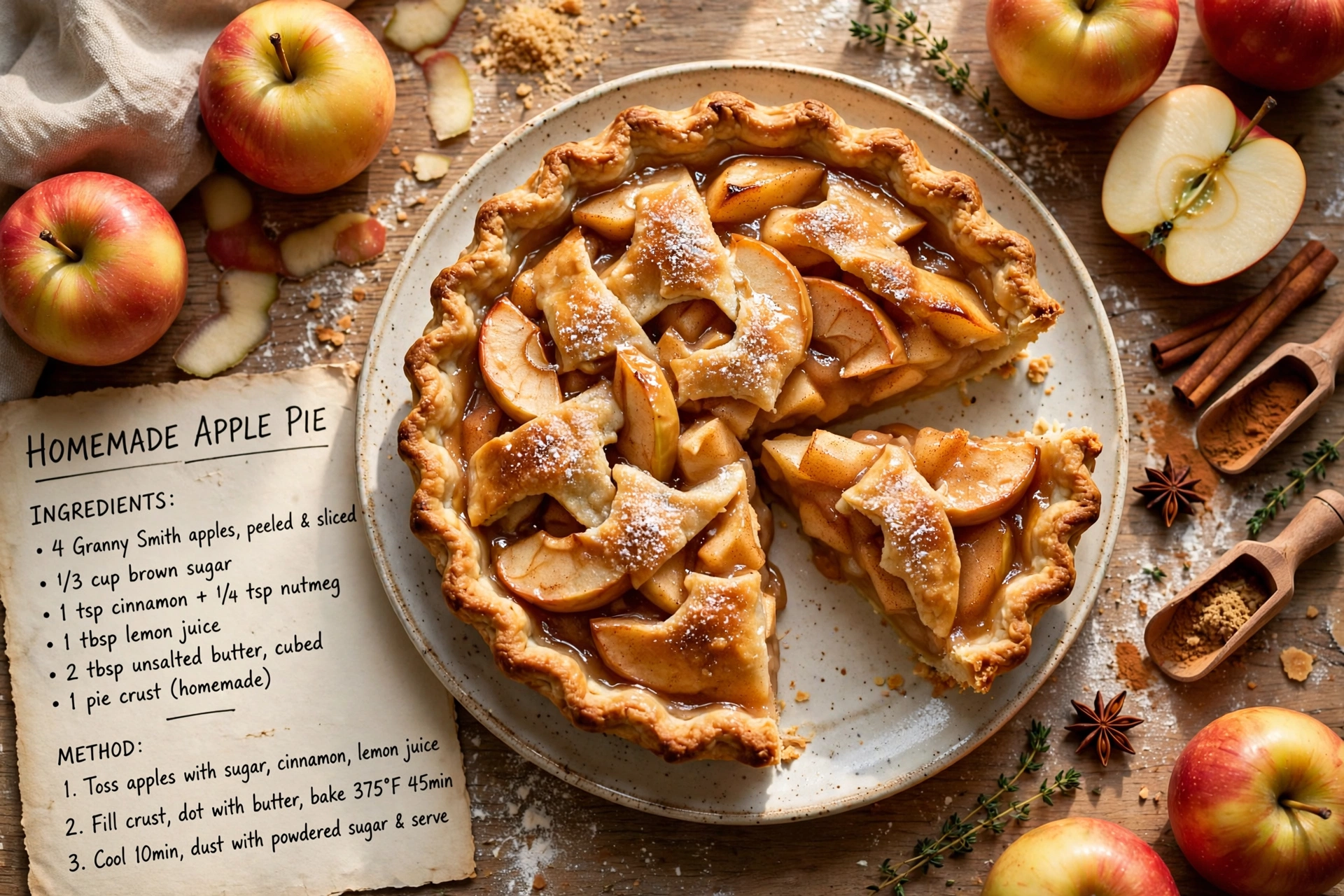
If you love experimenting with fancy apple pie crust designs, you can still have fun here even though this isn't a lattice top pie. Try fanning the apple slices in a tight spiral or concentric circles before adding the custard. It creates a stunning visual pattern once baked, and it is one of the easiest apple pie top crust ideas for a pie that skips the top crust entirely.
Ready to Bake?
Once your apples are arranged and your custard is whisked, the rest is mostly hands off oven time. Here is the full step-by-step recipe so you can bring this beautiful German classic to your own kitchen.
German Apple Pie (Apfelkuchen)
This German Apple Pie layers a buttery shortbread crust with cinnamon-spiced apples and a silky custard topping for a dessert that's rustic, elegant, and utterly irresistible.
Ingredients
- 2 cups all-purpose flour, plus extra for dusting
- 1/2 cup granulated sugar, divided
- 3/4 cup unsalted butter, cold, cubed, for the shortbread crust
- 1 1/2 tsp baking powder
- 1 large egg, for the crust
- 1/4 tsp salt
- 6 apples, peeled, cored, and thinly sliced, tart baking variety like Granny Smith or Boskoop
- 1 tbsp lemon juice, freshly squeezed, to prevent browning
- 1 tsp ground cinnamon
- 1 cup heavy cream, for the custard topping
- 2 large eggs, for the custard topping
- 1 tsp vanilla extract, pure
- 1/4 cup sliced almonds, optional, for topping
Instruction
Preheat the oven to 350 degrees F (175 degrees C) and grease a 9 or 10-inch springform pan.
In a large bowl, combine the flour, 1/4 cup sugar, baking powder, and salt. Cut in the cold butter until the mixture resembles coarse crumbs, then add the egg and mix just until a soft dough forms.
Press the dough evenly into the bottom of the prepared pan and about 1 inch up the sides to form a shallow crust. Chill in the fridge for 15 minutes while you prepare the apples.
In a large bowl, toss the sliced apples with lemon juice, remaining sugar, and cinnamon until evenly coated.
Arrange the apple slices over the chilled crust in an even, slightly overlapping layer.
Bake for 25 minutes, until the crust is just beginning to turn golden at the edges.
Meanwhile, whisk together the heavy cream, eggs, and vanilla extract until smooth to make the custard.
Remove the pie from the oven and carefully pour the custard mixture evenly over the apples. Scatter sliced almonds on top if using.
Return the pie to the oven and bake for another 25 to 30 minutes, until the custard is set and lightly golden with a gentle jiggle in the center.
Let the pie cool in the pan for at least 30 minutes before releasing the springform sides. Serve warm or at room temperature.
Equipment
- 9 or 10-inch springform pan
- Large mixing bowls
- Pastry cutter or fork
- Whisk
- Vegetable peeler
- Sharp knife
Notes
Serving Suggestions and Variations
This pie shines served slightly warm, ideally as an apple pie with cream on the side, a light dusting of powdered sugar, or even a scoop of vanilla ice cream if you are feeling indulgent. The custard layer means it does not need much embellishment, but a drizzle of caramel sauce never hurts.
For a fun twist, you can also turn this into an apple pie with shortbread crust and streusel by adding a buttery crumble topping instead of, or alongside, the sliced almonds. If you are bringing this to a bake sale or pie auction, this German Apple Pie tends to stand out among the usual lineup simply because it looks and tastes a little unexpected.
Storage Tips
Because of the custard layer, this pie should be stored in the refrigerator rather than at room temperature. Keep it covered for up to four days, and either enjoy it chilled or gently rewarmed.
Chef's Tip: Let refrigerated slices sit out for about 20 minutes before serving. The crust and custard both taste far better at cool room temperature than straight from the fridge.
However you decide to serve it, this Apfelkuchen is proof that dessert does not need to be complicated to be memorable. It is a wonderful addition to your dessert pies rotation, and one that is sure to earn a permanent spot in your baking notebook.