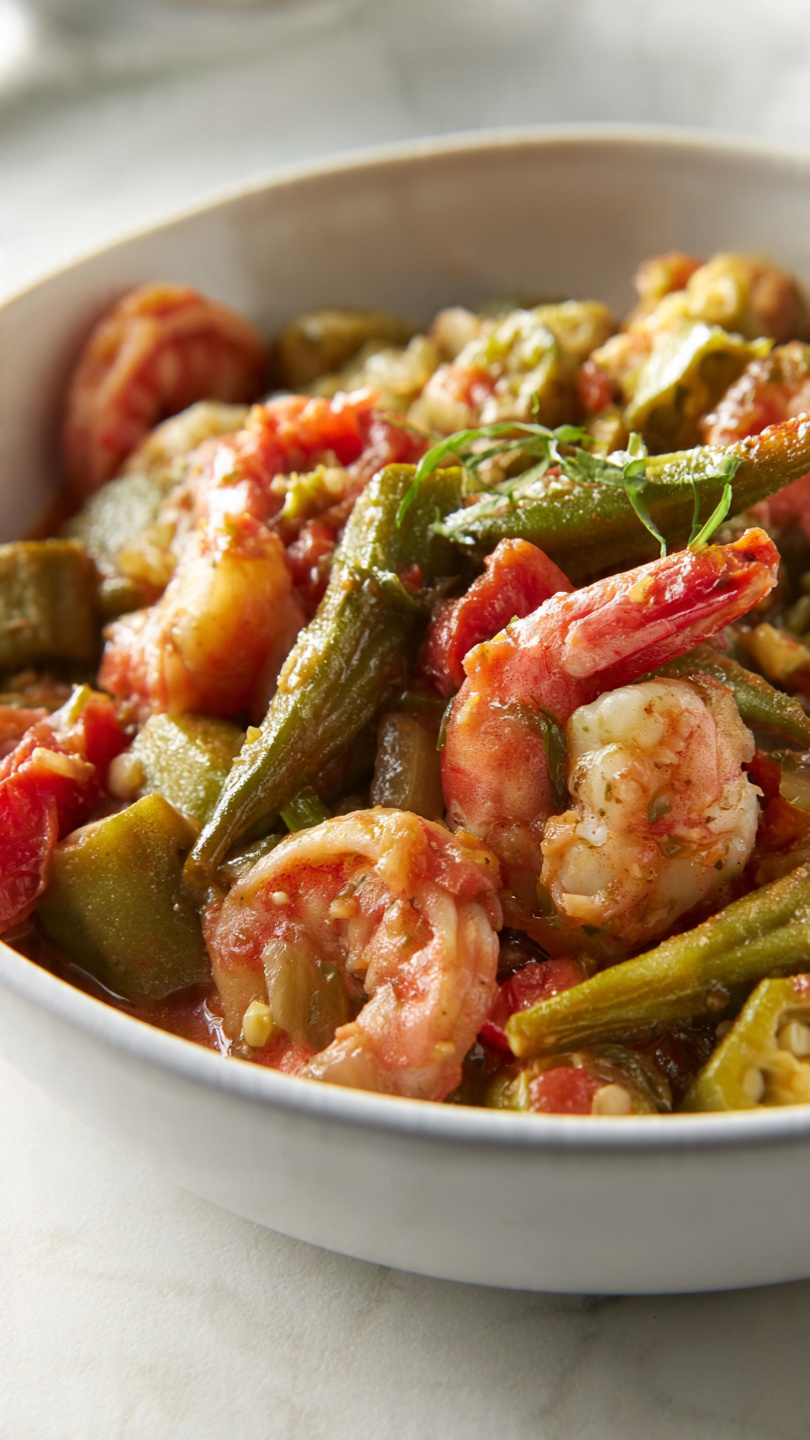
Smothered Okra with Shrimp
This Smothered Okra with Shrimp is a rich, soul-warming Southern classic packed with tender shrimp, silky okra, and a savory tomato base that tastes like it came straight from a Louisiana kitchen.

The Southern Comfort Dish You Didn't Know You Were Missing
If you grew up in Louisiana or spent any time in a proper Southern kitchen, the smell of smothered okra hitting a hot cast-iron pan is the kind of thing that stops you in your tracks. This Smothered Okra with Shrimp is everything a great weeknight meal should be: deeply savory, a little smoky, full of plump Gulf-style shrimp, and built on a rich tomato and vegetable base that tastes like it has been simmering since morning.
This dish sits comfortably alongside classics like Seafood Jambalaya with Andouille Sausage and Authentic Cajun Shrimp Jambalaya, but it is quieter, more intimate. Less of a party dish and more of the kind of thing you make for someone you love on a Tuesday. The okra practically melts into the sauce, giving it a gentle body that no thickener could replicate. And the shrimp? Added at the very end so they stay sweet, tender, and perfectly cooked.
This is Smothered Shrimp and Okra at its most honest: no shortcuts, no fuss, just layered Cajun flavor and a sauce you will want to eat straight from the pan.
Getting the right sear on your okra is the single most important technique in this recipe, and a wide, heavy-bottomed skillet makes all the difference. A quality Dutch oven or a 12-inch cast-iron pan will give you the even, dry heat needed to brown the okra properly before it ever touches the sauce. Using a good Cajun seasoning blend you actually trust also saves you from under-seasoned results.
Why Smothering the Okra First Is the Secret
Okra has a reputation. Ask anyone who has cooked it wrong and they will describe something slippery, stringy, and off-putting. But cook it right, and it becomes one of the most beautiful vegetables in Southern cuisine.
Smothering is a classic Creole and Cajun technique where vegetables are cooked low and slow in a savory liquid until they become tender and deeply flavorful. The trick with okra is to give it a head start over high heat before the liquid goes in. That initial sear in a hot, dry pan drives off moisture, develops color, and dramatically reduces the natural mucilage that gives okra its slick reputation.
Here is what you are building:
- The sear: Okra browns in a hot skillet until lightly caramelized
- The holy trinity: Onion, bell pepper, and celery form the aromatic base
- The tomato smother: Diced tomatoes, tomato paste, and stock create a rich, stew-like sauce
- The shrimp finish: Added at the very end so they cook gently in the residual heat
Chef's Tip: Do not skip patting the shrimp dry before seasoning them. Wet shrimp steam instead of sear, and even though these go into a saucy dish, a dry surface helps them absorb the Cajun seasoning and stay firmer during cooking.
Cajun Flavor, Built in Layers
What separates a forgettable Seafood Okra dish from one that people ask about for weeks is the way flavor is layered at every stage. You are not dumping spices into a pot. You are building them into the dish one step at a time.
Start with seasoned shrimp set aside to marinate lightly while the okra cooks. Then bloom the garlic and tomato paste in the rendered vegetable fat before the liquid ever hits the pan. That 60 to 90 seconds of cooking the tomato paste until it darkens adds a roasted, almost sweet depth that you cannot get any other way.
The finishing touch is two tablespoons of cold butter stirred into the sauce just before the shrimp go in. It rounds out every sharp edge, adds a glossy richness, and makes the whole sauce feel like it belongs in a restaurant.
Smothered Okra with Tomatoes and Shrimp rewards patience. Let the vegetables really soften. Let the sauce really thicken. The 12 to 15 minute simmer after everything comes together is not optional. That is where the magic happens.
Ready to make it? Here is the full step-by-step recipe:
Smothered Okra with Shrimp
This Smothered Okra with Shrimp is a rich, soul-warming Southern classic packed with tender shrimp, silky okra, and a savory tomato base that tastes like it came straight from a Louisiana kitchen.
Ingredients
- 1 1/2 lb large shrimp, peeled and deveined, tails removed
- 1 lb fresh okra, sliced into 0.5-inch rounds
- 3 tbsp olive oil, or vegetable oil
- 1 yellow onion, medium, finely diced
- 1 green bell pepper, finely diced
- 2 celery stalks, finely diced
- 4 garlic cloves, minced
- 14 oz canned diced tomatoes, with juices
- 2 tbsp tomato paste
- 1/2 cup chicken or seafood stock, low sodium preferred
- 1 1/2 tsp Cajun seasoning, store-bought or homemade
- 1 tsp smoked paprika
- 1/2 tsp dried thyme
- 2 bay leaves, removed before serving
- 1 tsp Worcestershire sauce
- 1/2 tsp hot sauce, Crystal or Tabasco, plus more to taste
- 3/4 tsp salt, or to taste
- 1/2 tsp black pepper, freshly cracked
- 2 tbsp unsalted butter
- 2 tbsp fresh parsley, chopped, for garnish
- 3 green onions, sliced, for garnish
Instruction
Pat the shrimp dry with paper towels and season with 0.5 tsp Cajun seasoning and a pinch of salt. Set aside.
Heat 2 tablespoons of oil in a large, heavy-bottomed skillet or Dutch oven over medium-high heat. Add the sliced okra in a single layer and cook, stirring occasionally, for 8 to 10 minutes until the okra is lightly browned and most of the sliminess has cooked off. Remove the okra and set aside.
Reduce the heat to medium and add the remaining 1 tablespoon of oil to the pan. Add the diced onion, bell pepper, and celery. Cook for 6 to 8 minutes, stirring often, until the vegetables are softened and translucent.
Add the minced garlic and tomato paste. Cook, stirring constantly, for 1 to 2 minutes until the paste darkens slightly and becomes fragrant.
Pour in the diced tomatoes with their juices and the stock. Stir in the remaining Cajun seasoning, smoked paprika, dried thyme, bay leaves, Worcestershire sauce, hot sauce, salt, and black pepper. Bring the mixture to a simmer.
Return the cooked okra to the pan. Stir gently to combine, then reduce the heat to medium-low. Simmer uncovered for 12 to 15 minutes, stirring occasionally, until the sauce thickens and the okra is very tender.
Add the butter and let it melt into the sauce, stirring to incorporate. Then nestle the seasoned shrimp into the smothered okra mixture. Cook for 3 to 5 minutes, turning the shrimp once, just until they are pink, curled, and cooked through. Do not overcook.
Remove and discard the bay leaves. Taste and adjust seasoning with salt, pepper, or more hot sauce as needed.
Serve immediately over steamed white rice or with crusty bread. Garnish with fresh parsley and sliced green onions.
Equipment
- Large heavy-bottomed skillet or Dutch oven (12-inch or larger)
- Wooden spoon or silicone spatula
- Sharp chef's knife
- Cutting board
- Measuring cups and spoons
- Paper towels
Notes
Serving, Storing, and Making It Your Own
How to Serve
The classic move is over a mound of fluffy long-grain white rice, which soaks up every drop of that tomato smother. Stone-ground grits are equally wonderful if you want something heartier and more Southern. A thick slice of crusty French bread served alongside this Shrimp Okra dish is never a bad idea either.
For garnish, do not skip the fresh green onions and parsley. They are not decorative. They add a clean, bright note that cuts through the richness of the sauce and makes each bite feel alive.
Variations Worth Trying
- Add andouille sausage for a smokier, meatier version that edges closer to a Seafood Jambalaya vibe. Slice and brown the sausage before the okra step, then set it aside with the okra.
- Make it spicier by adding a whole dried chile or doubling the hot sauce. This dish can absolutely handle heat.
- Swap the shrimp for crab claw meat or chunks of firm white fish like catfish or redfish for a different take on Smothered Okra and Seafood.
Storage Tips
Leftovers keep in the refrigerator for up to 3 days in an airtight container. Reheat gently on the stovetop with a splash of stock. For meal prep, make the entire okra smother base in advance and refrigerate it without the shrimp. When it's time to eat, reheat the base and add fresh shrimp, cooking them directly in the warm sauce. This gives you a meal that tastes completely freshly made even on a busy weeknight.