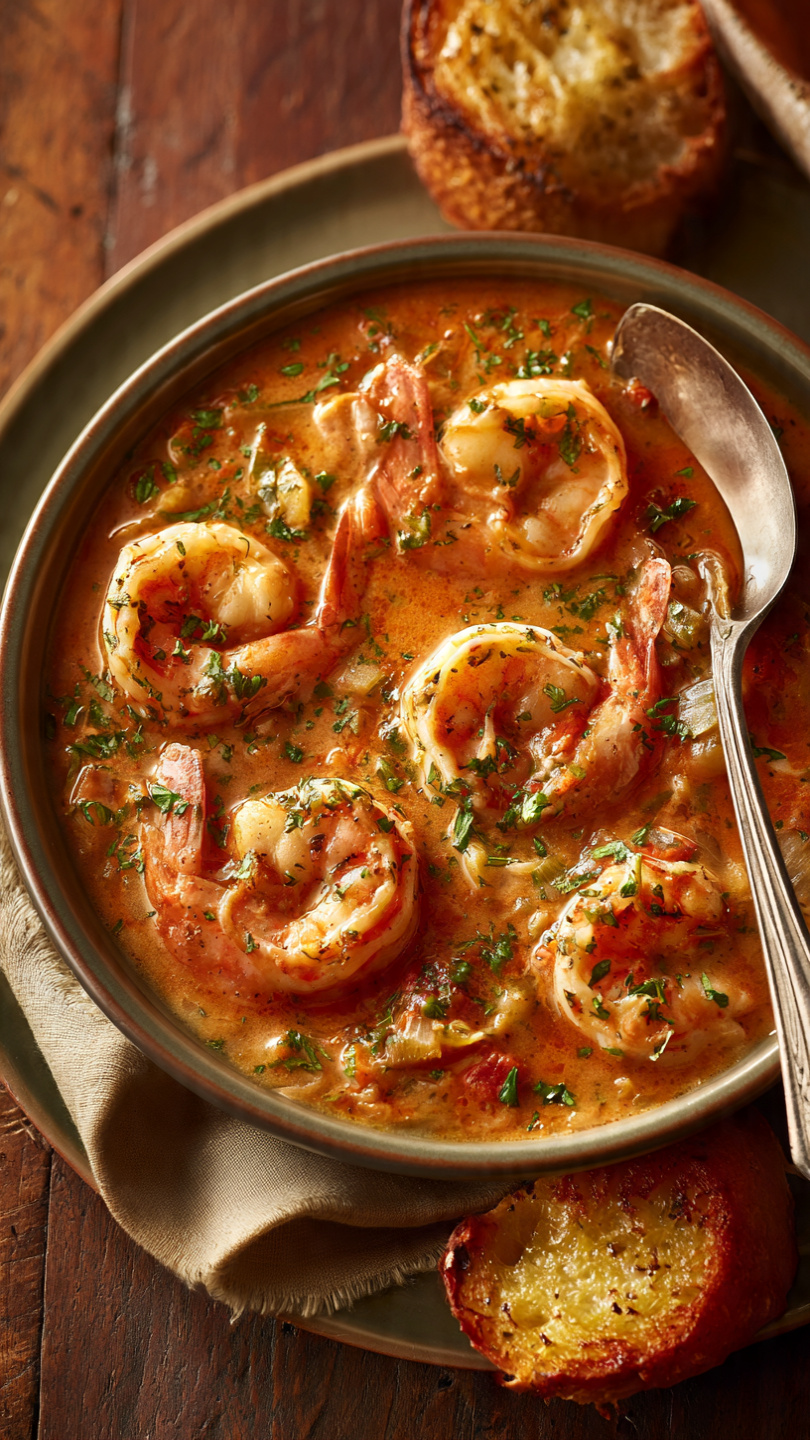
Shrimp Étouffée
This classic Southern Shrimp Étouffée is a rich, buttery Cajun dish smothered in a deeply flavored vegetable gravy and served over fluffy white rice. It is the ultimate easy shrimp étouffée recipe for a quick weeknight meal or a showstopping dinner.

The Classic Southern Comfort Dish You Need to Make This Week
If you have never made a proper Southern Shrimp Étouffée at home, you are in for one of the most satisfying cooking experiences imaginable. This dish is the definition of soul food: deeply savory, butter-rich, warmly spiced, and completely smothering a pile of fluffy white rice in the best possible way. Whether you grew up eating it in Louisiana or you are discovering it for the first time, this easy shrimp étouffée recipe will instantly earn a permanent spot in your dinner rotation.
Étouffée (pronounced ay-too-FAY) comes from a French word meaning smothered, and that tells you everything about what this dish is. Plump, juicy shrimp are cooked low and slow in a thick, glossy, spiced gravy built on a golden roux and the Cajun holy trinity of onion, bell pepper, and celery. The result is pure comfort in a bowl.
What Is Shrimp Étouffée, Really?
Shrimp étouffée is a cornerstone of Cajun and Creole cooking, born in the bayous of Louisiana and perfected in the kitchens of New Orleans. Unlike a gumbo, which is brothier and uses a much darker roux, étouffée is thicker, richer, and clings to every grain of rice. Unlike a shrimp stew, the flavors here are tightly layered and intentional, built spice by spice and vegetable by vegetable.
The dish sits somewhere between a quick shrimp étouffée meal you can pull off on a busy Tuesday night and something impressive enough to serve at a dinner party. It comes together in about 45 minutes, but the flavors taste like they have been simmering for hours.
Chef's Tip: The secret to an authentic étouffée is patience with the roux. Give it a full 3 to 4 minutes over medium heat, stirring constantly, until it turns a warm golden-blonde color. That toasty, nutty flavor is the backbone of the whole dish.
Why the Right Tools and Ingredients Matter Here
A heavy-bottomed skillet or Dutch oven is genuinely important for this recipe. You need even, consistent heat to build the roux without scorching it and to simmer the sauce gently without hot spots. Good-quality Cajun seasoning and a real Louisiana hot sauce like Tabasco or Crystal also make a noticeable difference in the final flavor.
Building the Cajun Holy Trinity
Every great Cajun dish starts with the holy trinity: onion, green bell pepper, and celery. This trio is to Cajun cooking what mirepoix is to French cuisine. Once you soften these vegetables in your buttery roux, the entire kitchen will smell extraordinary.
Here is what makes this shrimp étouffée recipe so approachable:
- Simple pantry ingredients you likely already have
- One pan from start to finish
- 30 minutes of cook time once everything is prepped
- Completely customizable heat level, from mild to fiery
You can keep it strictly classic, or use the sauce base to build a shrimp and sausage étouffée by browning some andouille sausage before you start the roux. Either way, the technique is identical.
Tips for Perfect Shrimp Every Time
The shrimp go in last and cook fast. This is the most critical step in the whole recipe. Overcooked shrimp are tough and rubbery, and they can ruin an otherwise perfect dish. Follow these simple rules:
- Pat the shrimp completely dry before adding them to the sauce.
- Use large or jumbo shrimp for the best texture and presentation.
- Cook just until pink, which takes only 3 to 5 minutes.
- Pull the pan off the heat immediately once the shrimp are done, even if the sauce looks a little loose. It will tighten as it rests.
Chef's Tip: Fresh or frozen shrimp both work beautifully here. If using frozen, thaw them overnight in the refrigerator and pat them very dry before cooking. Excess moisture will thin out your sauce.
Make It Your Own
This big easy shrimp étouffée dish is wonderfully forgiving and flexible. Some popular variations to consider:
- Add andouille sausage for a heartier shrimp and sausage étouffée with even deeper smokiness.
- Use crawfish tails in place of shrimp for a traditional crawfish étouffée during Lent or crawfish season.
- Stir in a tablespoon of tomato paste with the vegetables for a slightly richer, more Creole-style sauce.
- Serve over cauliflower rice for a lower-carb version that still delivers all the flavor.
Ready to make the best shrimp étouffée recipes easy enough for any home cook? Here is everything you need:
Shrimp Étouffée
This classic Southern Shrimp Étouffée is a rich, buttery Cajun dish smothered in a deeply flavored vegetable gravy and served over fluffy white rice. It is the ultimate easy shrimp étouffée recipe for a quick weeknight meal or a showstopping dinner.
Ingredients
- 4 tbsp unsalted butter, divided
- 3 tbsp all-purpose flour
- 1 yellow onion, finely diced
- 1 green bell pepper, finely diced
- 2 celery stalks, finely diced
- 4 garlic cloves, minced
- 1 1/2 cups seafood or chicken stock, low sodium preferred
- 1 tbsp Worcestershire sauce
- 1 tsp hot sauce, such as Tabasco or Crystal, adjust to taste
- 1 1/2 tsp Cajun seasoning, store-bought or homemade
- 1/2 tsp smoked paprika
- 1/2 tsp dried thyme
- 1 bay leaf
- 1 1/2 lb large shrimp, peeled, deveined, tails removed
- 4 green onions, sliced, for garnish
- 2 tbsp fresh parsley, chopped, for garnish
- 1/2 tsp salt, or to taste
- 1/4 tsp black pepper, freshly ground
- 3 cups cooked white rice, for serving
Instruction
Melt 3 tablespoons of butter in a large heavy-bottomed skillet or Dutch oven over medium heat.
Whisk in the flour and stir constantly for 3 to 4 minutes until the roux turns a light golden-blonde color and smells nutty.
Add the diced onion, bell pepper, and celery (the Cajun holy trinity) to the roux. Cook, stirring frequently, for 6 to 8 minutes until the vegetables are softened.
Stir in the minced garlic, Cajun seasoning, smoked paprika, and dried thyme. Cook for 1 minute until fragrant.
Gradually pour in the stock while stirring constantly to prevent lumps from forming. Add the Worcestershire sauce, hot sauce, and bay leaf.
Bring the mixture to a gentle simmer and cook for 8 to 10 minutes, stirring occasionally, until the sauce thickens to a gravy-like consistency.
Season with salt and black pepper. Taste and adjust the hot sauce and Cajun seasoning as needed.
Add the remaining 1 tablespoon of butter and the peeled shrimp to the skillet. Stir to coat the shrimp in the sauce.
Cook for 3 to 5 minutes, just until the shrimp are pink and cooked through. Do not overcook or the shrimp will become rubbery.
Remove the bay leaf. Spoon the étouffée generously over cooked white rice and garnish with sliced green onions and fresh parsley. Serve immediately.
Equipment
- Large heavy-bottomed skillet or Dutch oven
- Whisk
- Wooden spoon or silicone spatula
- Chef's knife and cutting board
- Measuring cups and spoons
- Rice cooker or medium saucepan
Notes
Serving, Storing, and Making It Ahead
Shrimp étouffée is best served immediately over a generous mound of hot white rice, scattered with green onions and fresh parsley. For a full Southern spread, serve it alongside crusty French bread to soak up every last drop of that buttery sauce.
Leftovers keep in the refrigerator for up to 3 days in a sealed container. Reheat gently on the stovetop over low heat with a splash of broth to loosen the sauce. Avoid high microwave heat, which will overcook the shrimp.
For make-ahead convenience, prepare the entire sauce base without the shrimp up to 2 days in advance and refrigerate it. When you are ready to eat, bring the sauce back to a simmer, add fresh shrimp, and dinner is on the table in under 10 minutes. It is a genuinely quick shrimp étouffée meal when you plan ahead like this.
Whether this is your first time making étouffée or you are a lifelong fan of the dish, this recipe delivers everything you want: warmth, depth, just the right amount of spice, and that unmistakable comfort that only real Southern cooking can provide.