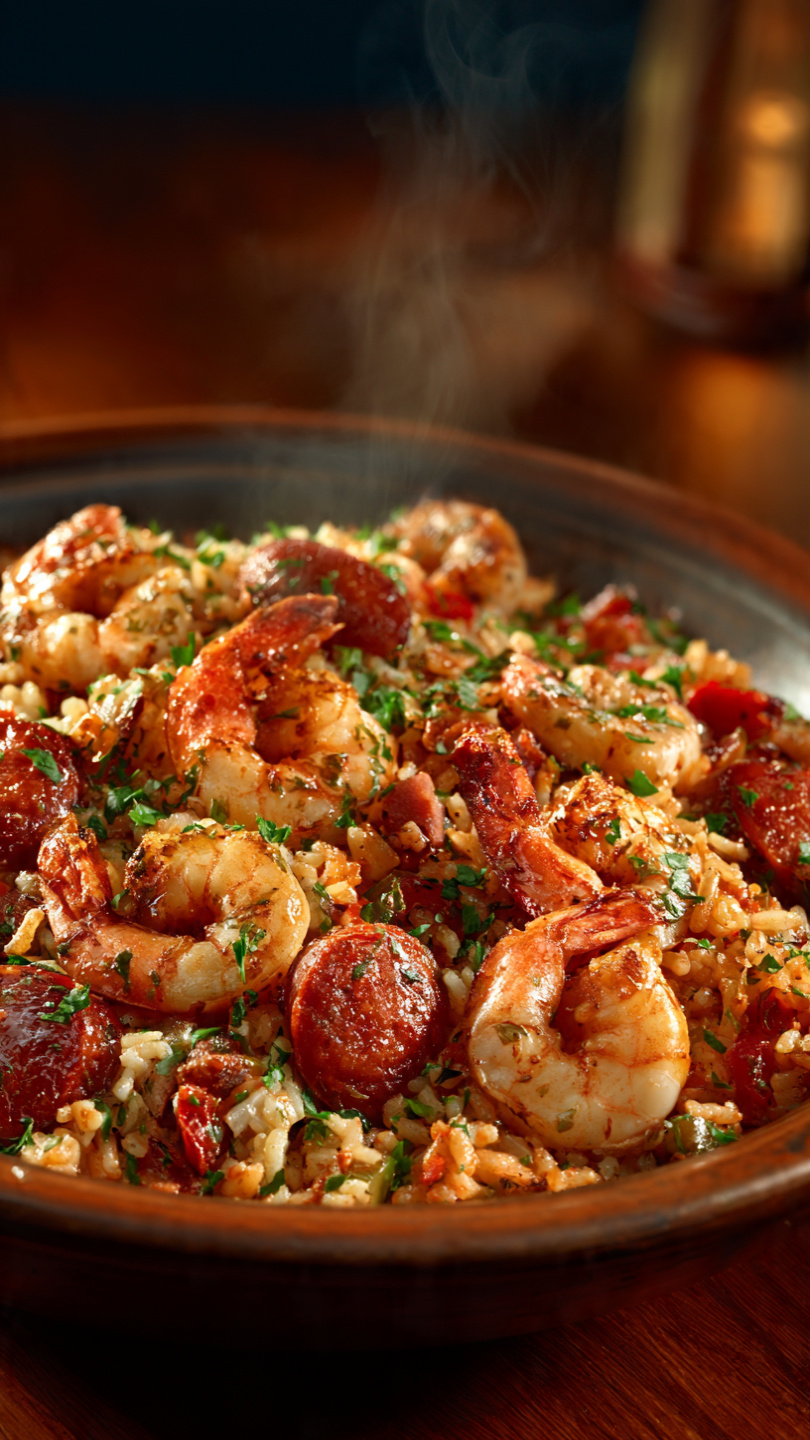
Shrimp and Sausage Jambalaya
This bold and hearty Shrimp and Sausage Jambalaya brings the soul of New Orleans straight to your kitchen with smoky andouille, tender shrimp, and perfectly seasoned Creole rice all cooked in one pot.

The One-Pot Creole Classic That Never Gets Old
There is a reason jambalaya has been feeding crowds from New Orleans kitchens for generations. It is bold, deeply satisfying, built on humble pantry staples, and practically impossible to mess up once you understand a few key techniques. This Shrimp and Sausage Jambalaya captures everything that makes the dish legendary: smoky andouille, plump shrimp, the holy trinity of Creole cooking, and rice that soaks up every bit of flavor from the pot.
Whether you are looking for easy jambalaya cooking on a busy weeknight or planning a weekend feast for a crowd, this recipe delivers every single time.
What Makes a Great Jambalaya?
Good jambalaya comes down to three things: the right proteins, well-seasoned aromatics, and rice that cooks directly in the pot rather than separately. This is what separates a truly great Creole jambalaya with sausage from versions that taste flat or watered-down.
The foundation is the holy trinity of Cajun and Creole cooking: onion, bell pepper, and celery. From there, garlic, crushed tomatoes, and a deeply spiced broth do all the heavy lifting. Andouille sausage brings the smoke. Shrimp bring the sweetness. Together they create something that tastes like it took all day, even though it comes together in under an hour.
Chef's Tip: Do not skip browning the andouille before adding the vegetables. Those caramelized bits left on the bottom of the pot are packed with flavor and will melt right into your dish as everything simmers.
Creole vs. Cajun Jambalaya: What Is the Difference?
If you have searched for Cajun jambalaya recipe ideas, you may have noticed that some versions are tomato-based and others are not. Here is the short version:
- Creole style jambalaya (sometimes called "red jambalaya") includes tomatoes and is the style most associated with New Orleans city cooking. This recipe is Creole style.
- Cajun jambalaya skips the tomatoes and gets a darker color from the deeply browned meats. It is more common in the rural parishes west of New Orleans.
Both are incredible. This Creole style jambalaya meal uses crushed tomatoes for a rich, slightly tangy base that clings beautifully to the rice and keeps everything moist.
The Ingredients That Make a Difference
For a dish this full of flavor, quality proteins and a good Creole seasoning blend are worth paying attention to. Using a well-made andouille sausage and fresh wild-caught shrimp will take your jambalaya from good to genuinely memorable.
Key Ingredient Notes
Andouille Sausage: This is the backbone of spicy jambalaya ingredients. Look for a sausage with real smoke flavor. Brands sold at specialty butcher counters or Cajun-style grocers tend to be far better than generic supermarket versions.
Shrimp: Medium to large shrimp (21 to 25 count per pound) work best here. They are substantial enough to hold up in the pot without overcooking in seconds. Fresh or frozen both work fine, just make sure they are fully thawed before adding them.
Long-Grain White Rice: Use long-grain rice, not medium or short grain. It holds its shape as it absorbs the broth rather than turning mushy.
Creole Seasoning: Store-bought blends like Tony Chachere's are perfectly good here and a staple of easy jambalaya cooking. If you have a few extra minutes, making your own with paprika, garlic powder, onion powder, cayenne, thyme, and oregano gives you full control over the heat level.
Tips for Perfect Rice Every Time
The most common mistake people make with jambalaya is lifting the lid during the rice cooking phase. Resist the urge. Steam is doing the work, and breaking the seal slows everything down and can leave you with unevenly cooked, crunchy rice.
A few other tips that make a real difference:
- Use a heavy pot. A Dutch oven distributes heat evenly and prevents the bottom layer of rice from scorching.
- Liquid ratio matters. This recipe uses a 2-to-1 ratio of liquid to rice, accounting for the moisture in the tomatoes.
- Add shrimp last. Shrimp only need 5 to 7 minutes. Adding them at the end of the cook keeps them tender and perfectly cooked.
Chef's Tip: If your jambalaya looks a little soupy after the rice finishes, give it 5 minutes off the heat with the lid on. The rice will absorb the remaining liquid as it steams.
How to Serve Shrimp and Sausage Jambalaya
Jambalaya is a complete one-pot meal on its own, but a few simple sides can round out the table beautifully:
- Crusty French bread for soaking up the sauce
- A simple green salad dressed with a light vinaigrette to cut through the richness
- Cornbread for a Southern-style spread
- Cold beer or iced sweet tea because that is simply the correct beverage pairing
For a party, this recipe doubles easily and stays warm in the pot for a good 30 minutes off the heat. It is one of those Creole chicken and sausage jambalaya-style dishes that always gets people going back for seconds.
Ready to bring New Orleans to your table? Here is everything you need:
Shrimp and Sausage Jambalaya
This bold and hearty Shrimp and Sausage Jambalaya brings the soul of New Orleans straight to your kitchen with smoky andouille, tender shrimp, and perfectly seasoned Creole rice all cooked in one pot.
Ingredients
- 12 oz andouille sausage, sliced into rounds
- 1 lb large shrimp, peeled and deveined, tails on or off
- 1 1/2 cups long-grain white rice, uncooked
- 3 cups chicken broth, low sodium preferred
- 14 oz crushed tomatoes, one standard can
- 1 yellow onion, diced
- 1 green bell pepper, diced
- 3 celery stalks, diced
- 4 garlic cloves, minced
- 2 tbsp olive oil, or vegetable oil
- 2 tbsp Creole seasoning, store-bought or homemade
- 1 tsp smoked paprika
- 1/2 tsp dried thyme
- 1/2 tsp dried oregano
- 2 bay leaves, removed before serving
- 1 tsp hot sauce, Tabasco or Crystal, plus more to taste
- 1 tsp Worcestershire sauce
- 4 green onions, sliced, for garnish
- 1/4 cups fresh flat-leaf parsley, chopped, for garnish
Instruction
Heat the olive oil in a large heavy-bottomed pot or Dutch oven over medium-high heat. Add the sliced andouille sausage and cook for 4 to 5 minutes, stirring occasionally, until browned on both sides. Transfer the sausage to a plate and set aside.
In the same pot, add the diced onion, bell pepper, and celery. Cook over medium heat for 5 to 6 minutes, scraping up any browned bits from the bottom of the pot, until the vegetables are softened.
Add the minced garlic and cook for 1 minute until fragrant.
Stir in the Creole seasoning, smoked paprika, dried thyme, and dried oregano. Toast the spices for 30 seconds, stirring constantly.
Add the crushed tomatoes, chicken broth, Worcestershire sauce, hot sauce, and bay leaves. Stir to combine, then return the browned sausage to the pot.
Bring the mixture to a boil, then stir in the uncooked rice. Reduce the heat to low, cover tightly, and simmer for 20 to 25 minutes until the rice has absorbed the liquid and is fully cooked. Do not lift the lid during this time.
Nestle the shrimp into the pot, pressing them gently into the rice. Cover and cook for 5 to 7 minutes until the shrimp are pink and curled and cooked through.
Remove and discard the bay leaves. Taste and adjust seasoning with additional Creole seasoning, hot sauce, or salt as needed.
Serve immediately garnished with sliced green onions and fresh parsley.
Equipment
- Large Dutch oven or heavy-bottomed pot with lid
- Wooden spoon or silicone spatula
- Sharp chef's knife
- Cutting board
- Measuring cups and spoons
- Ladle for serving
Notes
Storing and Reheating
Leftover jambalaya keeps well in the refrigerator in an airtight container for up to 3 days. The rice will absorb more liquid as it sits, so when reheating on the stovetop, stir in a splash of chicken broth to loosen it back up. A low and slow reheat over medium-low heat works better than blasting it on high.
Freezing is possible but not ideal once the shrimp are cooked. If you want to meal prep this ahead, freeze the sausage and rice base without the shrimp, then add fresh shrimp when you reheat and serve. That way every bowl tastes just as good as the first night.