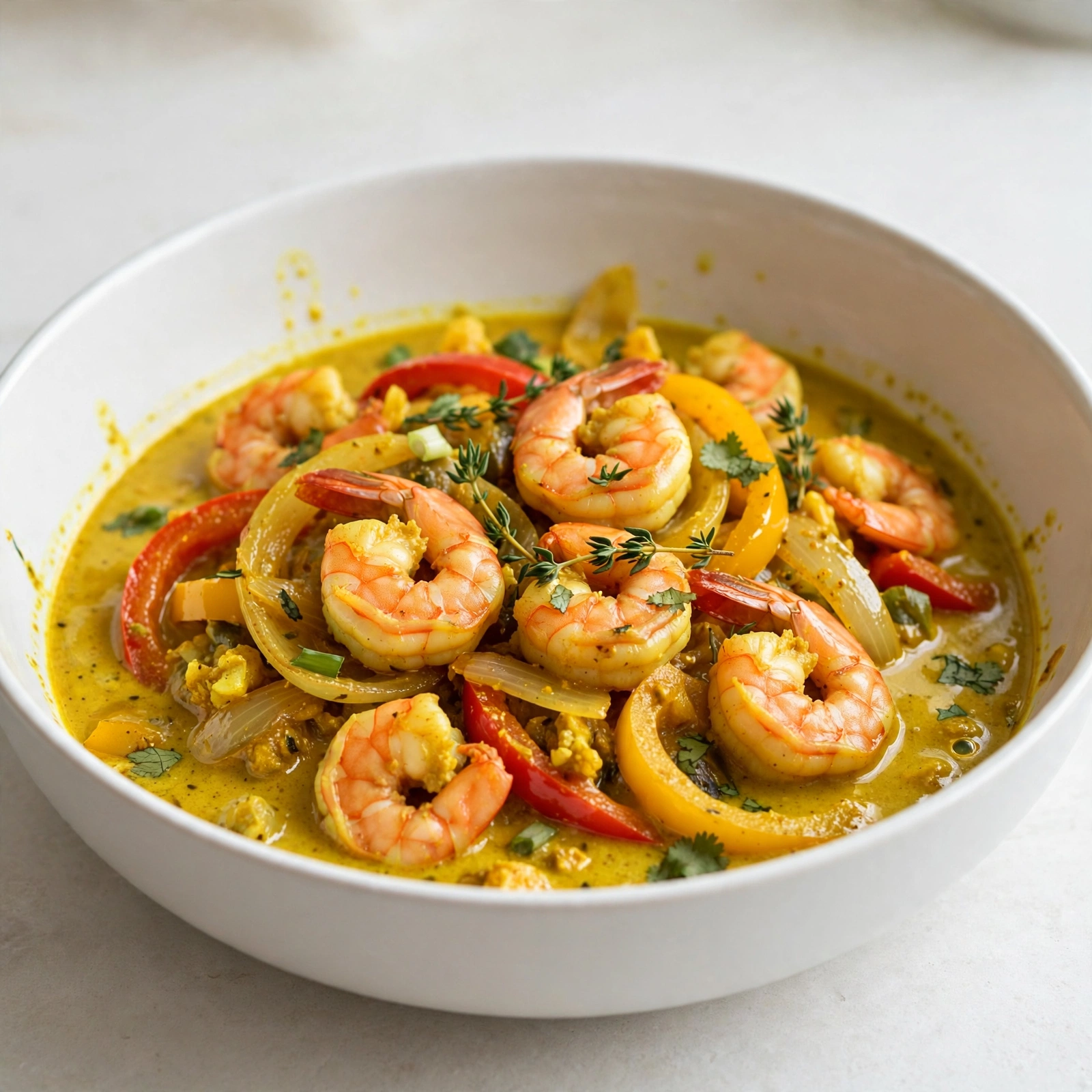
Jamaican Curry Shrimp
Creamy Jamaican curry shrimp simmered in coconut milk with Scotch bonnet peppers and warm curry spices, a fast weeknight seafood dinner packed with island flavor.

A Taste of the Caribbean in One Pot
There is a reason Jamaican curry shrimp shows up at every island cookout and Sunday dinner table. It is fast, it is bold, and it turns a handful of pantry spices into something that tastes like it took hours. This is one of those Jamaican shrimp recipes that proves you do not need a long ingredient list to make something unforgettable, just the right curry powder, a good simmer in coconut milk, and a little patience while the shrimp cooks through.
If you have ever had Jamaican shrimp curry at a beachside shack or a family gathering, you know the sauce is the real star. It is silky, a little spicy, deeply savory, and just sweet enough from the coconut milk to balance the heat of the scotch bonnet. This version keeps things approachable for a weeknight while staying true to the flavors that make curry shrimp Jamaican style so beloved.
Before we get cooking, the right tools and ingredients make a real difference here. A good Jamaican curry powder is non negotiable, it is warmer and earthier than standard curry powder thanks to allspice and toasted spices, and a heavy bottomed skillet helps the sauce reduce evenly without scorching.
What Makes This Curry Shrimp Jamaican Style
Jamaican curry differs from Indian or Thai curry in a few key ways. The curry powder itself is a distinct blend, usually built around turmeric, coriander, cumin, fenugreek, and allspice, which gives it that unmistakable golden color and warm, slightly sweet backbone. Toasting the powder in oil before adding anything else is the step that unlocks its full aroma, so do not skip it.
This recipe leans into creamy Jamaican curry shrimp territory by finishing the sauce with full fat coconut milk instead of just water or broth. The result is silky, rich, and clings beautifully to rice.
Chef's Tip: Keep the scotch bonnet whole and just pierce it once with a knife. It will perfume the whole pot with heat and fruitiness without making the dish blazing hot. Mince it only if you want serious fire.
Tips for Perfectly Cooked Shrimp
Shrimp cook fast, and that is both the best and trickiest part of this recipe. A few things to keep in mind:
- Marinate briefly. Even 10 to 15 minutes with curry powder and salt helps the shrimp absorb flavor before they hit the pan.
- Build the sauce first. Get the onions, peppers, and coconut milk fully simmered before the shrimp ever touch the pot.
- Watch the clock. Shrimp need only 3 to 5 minutes in a simmering sauce. Once they curl into a tight C shape and turn opaque, pull them off the heat.
This approach is what separates a good Jamaican coconut shrimp curry from a rubbery, overcooked one. The sauce should be ready and waiting for the shrimp, not the other way around.
Ready to make it? Here is the full step-by-step recipe:
Jamaican Curry Shrimp
Creamy Jamaican curry shrimp simmered in coconut milk with Scotch bonnet peppers and warm curry spices, a fast weeknight seafood dinner packed with island flavor.
Ingredients
- 1 1/2 lb large shrimp, peeled and deveined, tails on or off
- 2 tbsp Jamaican curry powder, plus more for seasoning shrimp
- 2 tbsp coconut oil, or vegetable oil
- 1 yellow onion, diced
- 3 cloves garlic, minced
- 1 tbsp fresh ginger, grated
- 1 bell pepper, sliced, red or yellow
- 1 scotch bonnet pepper, whole, pierced once for flavor without full heat, or minced for spicier curry
- 2 sprigs fresh thyme, or 1 tsp dried thyme
- 1 cup coconut milk, full fat, canned
- 1/2 cup seafood or vegetable broth, or water
- 2 stalks green onion, sliced, for garnish
- 1 lime, juiced
- 1 tsp salt, or to taste
- 1/2 tsp black pepper, freshly ground
Instruction
Pat the shrimp dry and toss with 1 teaspoon of curry powder, a pinch of salt, and black pepper. Set aside to marinate while you prep the rest.
Heat coconut oil in a large skillet or Dutch oven over medium heat. Add the remaining curry powder and toast it in the oil for about 30 seconds, stirring constantly, until fragrant.
Add the onion, garlic, and ginger. Cook for 3 to 4 minutes until the onion softens and turns translucent.
Stir in the bell pepper, scotch bonnet, and thyme. Cook for another 2 minutes.
Pour in the coconut milk and broth. Bring to a gentle simmer and let it cook for 5 to 7 minutes so the sauce thickens slightly and the flavors meld.
Add the marinated shrimp in a single layer. Simmer for 3 to 5 minutes, flipping halfway, until the shrimp turn pink and opaque. Do not overcook.
Remove the scotch bonnet pepper and thyme sprigs if used whole. Stir in the lime juice and adjust salt to taste.
Garnish with sliced green onion and serve hot over rice.
Equipment
- Large skillet or Dutch oven
- Cutting board
- Sharp knife
- Wooden spoon
- Microplane or grater
Notes
Serving Suggestions and Variations
Jamaican curry shrimp is traditionally served over steamed white rice or rice and peas, which soaks up every bit of that coconut curry sauce. Festival, a slightly sweet Jamaican fried dough, is another classic pairing if you want to go all in on the island meal.
A few easy variations to try:
- Add cubed potato or carrots to the sauce for a heartier, stew-like version.
- Stir in a handful of chopped callaloo or spinach at the end for extra greens.
- Use coconut oil instead of butter throughout for a more traditional, dairy free profile.
Storing and Reheating
Because shrimp are delicate, this dish is best enjoyed fresh, but leftovers still hold up reasonably well. Store the curry in an airtight container in the fridge for up to two days, and reheat it low and slow on the stovetop rather than in the microwave, which tends to overcook the shrimp further. If you know you will have leftovers, consider slightly undercooking the shrimp on the first pass so they finish perfectly during reheating.
However you serve it, this curry brings warmth, spice, and a little bit of island sunshine to the table in under 40 minutes, no passport required.